Overview
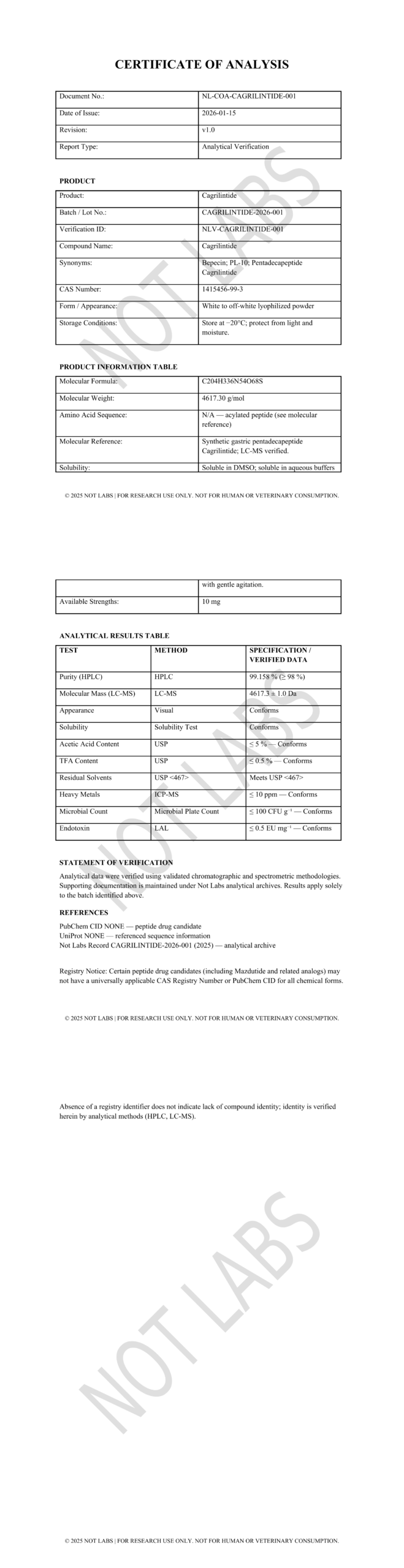
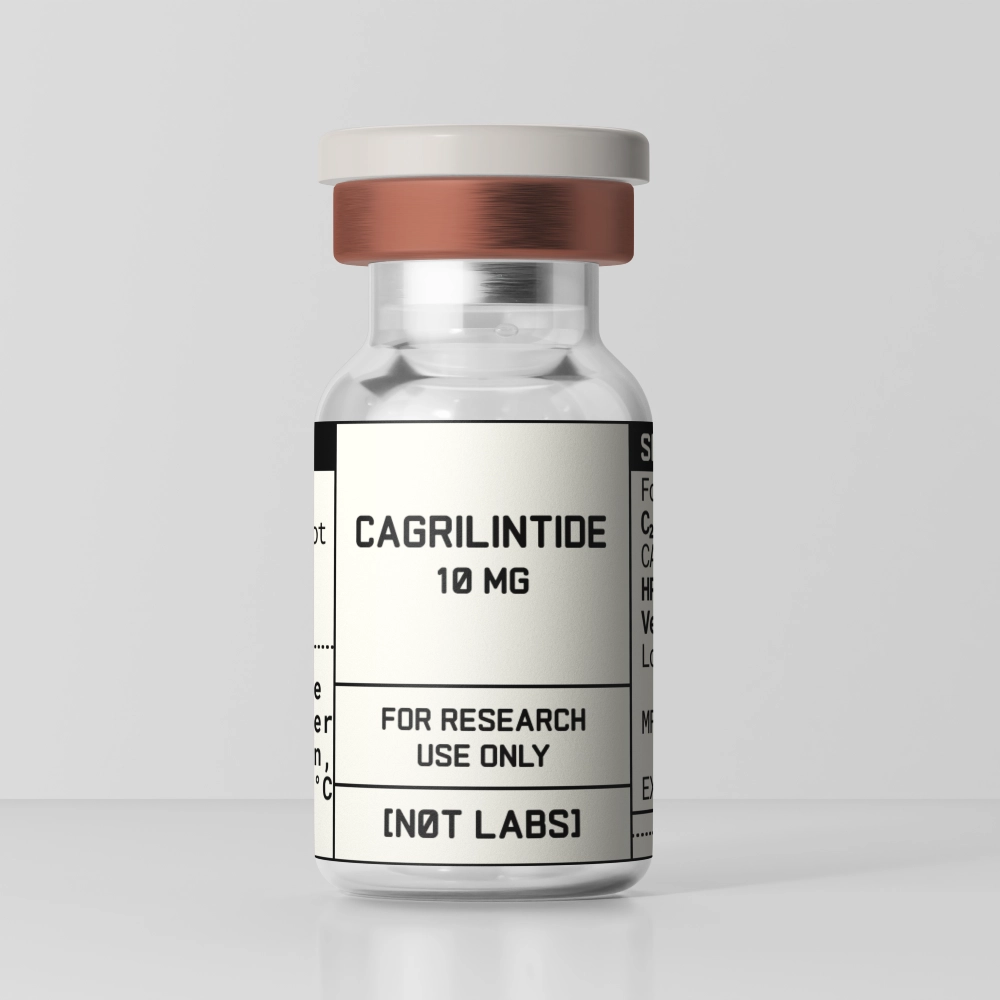
Cagrilintide is a synthetic peptide analog of human amylin developed for laboratory research into metabolic regulation and appetite-associated signaling pathways. In preclinical research settings, cagrilintide has been studied for its prolonged receptor activity and interaction with central and peripheral mechanisms involved in energy balance.
This compound is supplied strictly for laboratory and investigational research use.
Compound Breakdown
Amylin is a peptide hormone co-secreted with insulin that plays a role in post-prandial signaling and energy regulation. Cagrilintide is designed as a long-acting amylin receptor agonist, allowing researchers to investigate:
Amylin-mediated signaling pathways
Central nervous system appetite-associated mechanisms
Interactions between amylin and incretin systems
Prolonged receptor engagement in metabolic models
Its extended activity profile makes cagrilintide a useful research tool for studying sustained signaling effects.
Research Context
Research investigations involving cagrilintide commonly explore:
Appetite and satiety signaling pathways
Energy balance and metabolic regulation models
Comparative studies alongside incretin-based compounds
Combination signaling frameworks in preclinical systems
These investigations remain limited to controlled laboratory environments and do not imply clinical or therapeutic outcomes.
Related Categories
Cagrilintide is frequently evaluated alongside Semaglutide Peptide and Retatrutide Peptide, and is also incorporated into combination research formulations such as the Cagrilintide + Semaglutide Bundle.