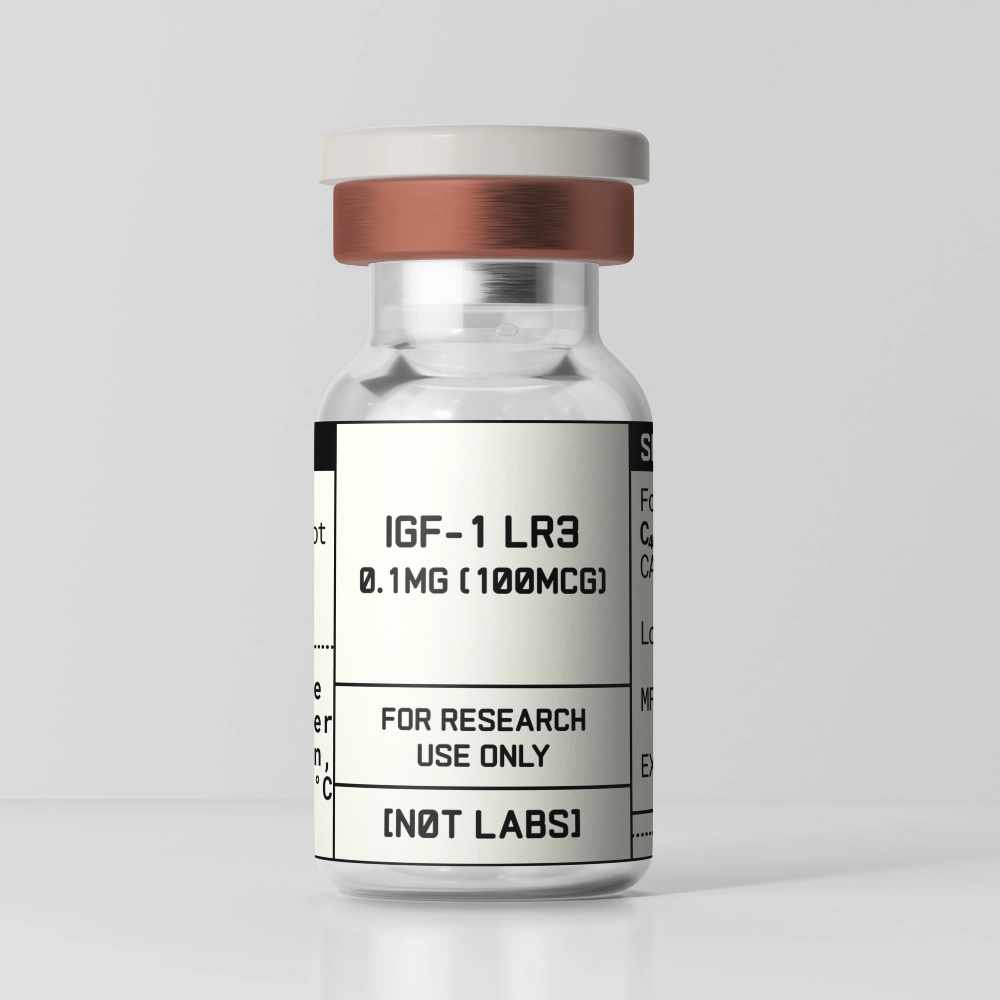
Overview
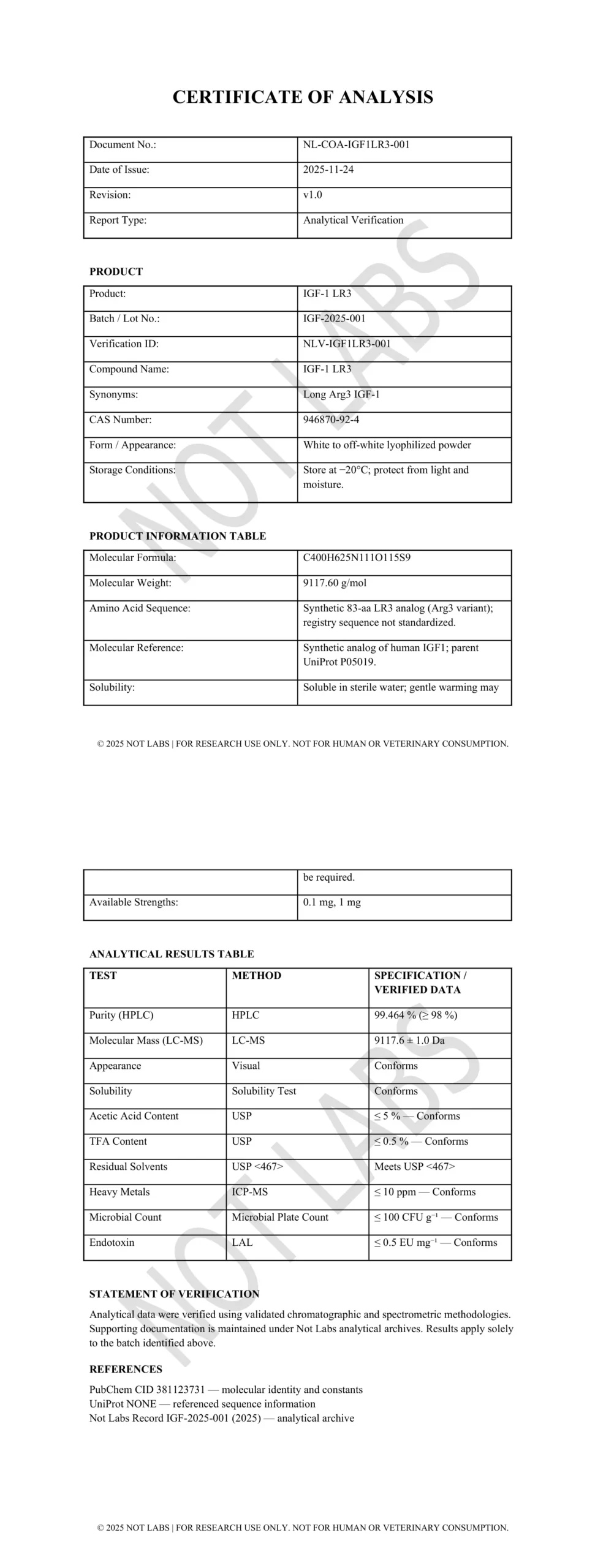
IGF-1 LR3 is a synthetic analog of insulin-like growth factor-1 (IGF-1) designed with amino acid substitutions that reduce binding to IGF-binding proteins and extend functional persistence in preclinical research models. In laboratory settings, this allows researchers to investigate IGF-1 receptor–mediated signaling over longer experimental windows.
This compound is supplied strictly for laboratory and investigational research purposes.
Compound Breakdown
The “LR3” modification refers to specific structural changes that alter receptor interaction dynamics and clearance characteristics compared to native IGF-1. In research models, this enables investigation of:
IGF-1 receptor activation and downstream signaling
Extended signaling duration relative to unmodified IGF-1
Comparative pathway analysis involving growth factor signaling
Temporal effects of prolonged receptor engagement
These properties make IGF-1 LR3 useful for controlled signaling studies in preclinical environments.
Research Context
Research investigations involving IGF-1 LR3 commonly explore:
Growth factor–mediated cellular signaling pathways
Cell proliferation and differentiation models
Comparative studies of IGF-1 analogs
Receptor sensitivity and signaling persistence frameworks
These investigations remain limited to controlled laboratory environments and do not imply clinical or therapeutic outcomes.
Related Categories
IGF-1 LR3 is frequently compared with CJC-1295 (DAC) Peptide and CJC-1295 (No DAC) Peptide in growth hormone–related signaling research.