Overview
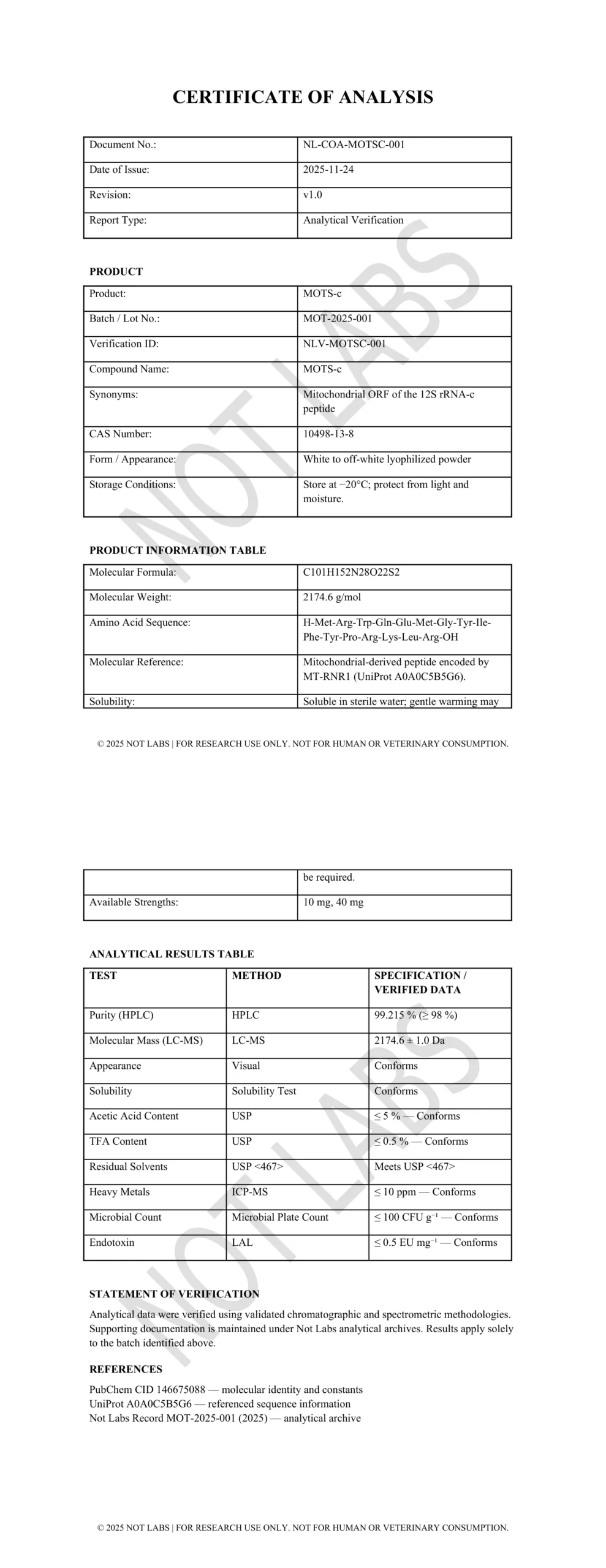
MOTS-c is a mitochondrial-derived peptide encoded within the mitochondrial genome and expressed in response to cellular metabolic stress. In laboratory research settings, MOTS-c has been studied for its involvement in metabolic signaling pathways that coordinate mitochondrial function with nuclear gene expression.
This compound is supplied strictly for laboratory and investigational research purposes.
Compound Breakdown
Unlike nuclear-encoded peptides, MOTS-c originates from mitochondrial DNA, positioning it as a unique signaling molecule in metabolic regulation research. In preclinical models, MOTS-c has been investigated for its influence on:
Mitochondrial–nuclear communication pathways
Cellular metabolic adaptation mechanisms
Glucose and lipid metabolism–associated signaling
Stress-responsive metabolic regulation frameworks
Its mitochondrial origin makes MOTS-c a distinct tool for studying intracellular metabolic coordination.
Research Context
Research investigations involving MOTS-c commonly explore:
Metabolic flexibility and cellular adaptation models
Mitochondrial signaling responses to metabolic stress
Comparative studies alongside incretin-based research compounds
Combination research frameworks targeting systemic metabolic regulation
These investigations remain limited to controlled laboratory environments and do not imply clinical or therapeutic outcomes.
Related Categories
MOTS-c is frequently studied alongside Semaglutide Peptide, Tirzepatide Peptide, and Retatrutide Peptide, and is also incorporated into metabolic research formulations such as the Metabolic Bundle I: Classic, Metabolic Bundle II: Synergy, and Metabolic Bundle III: Next Gen.