Overview
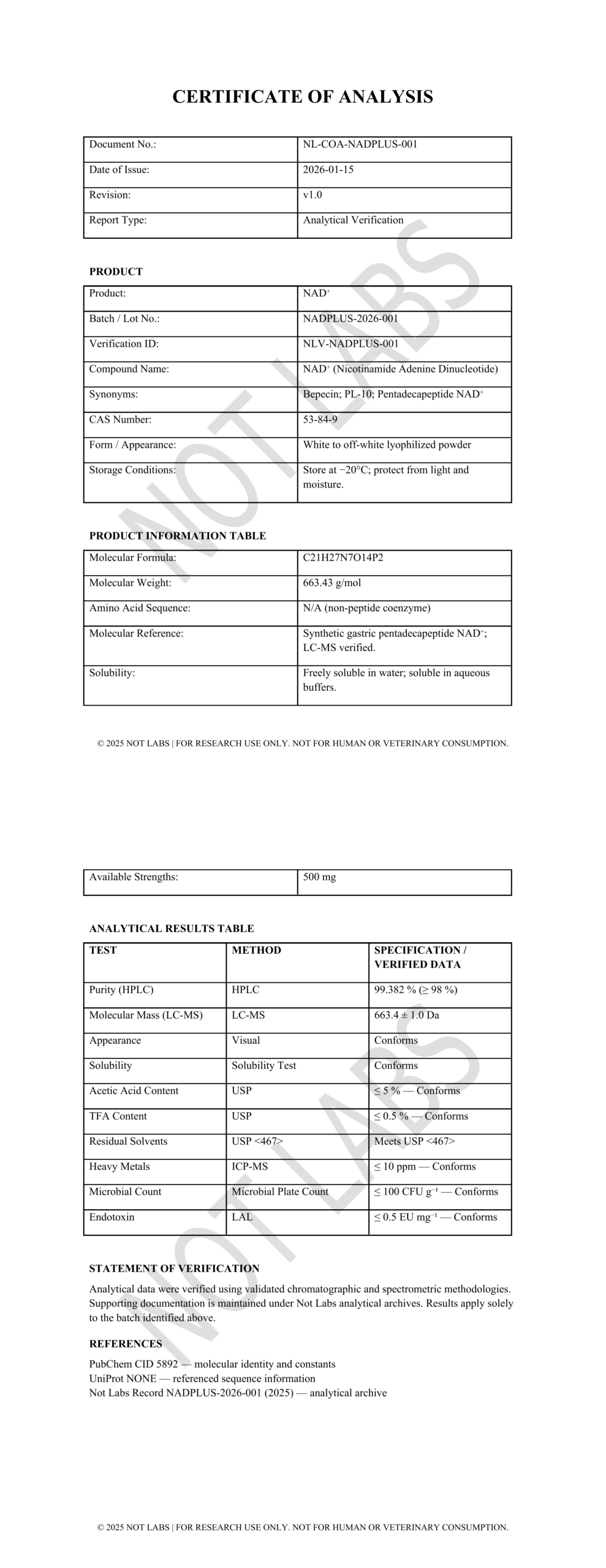
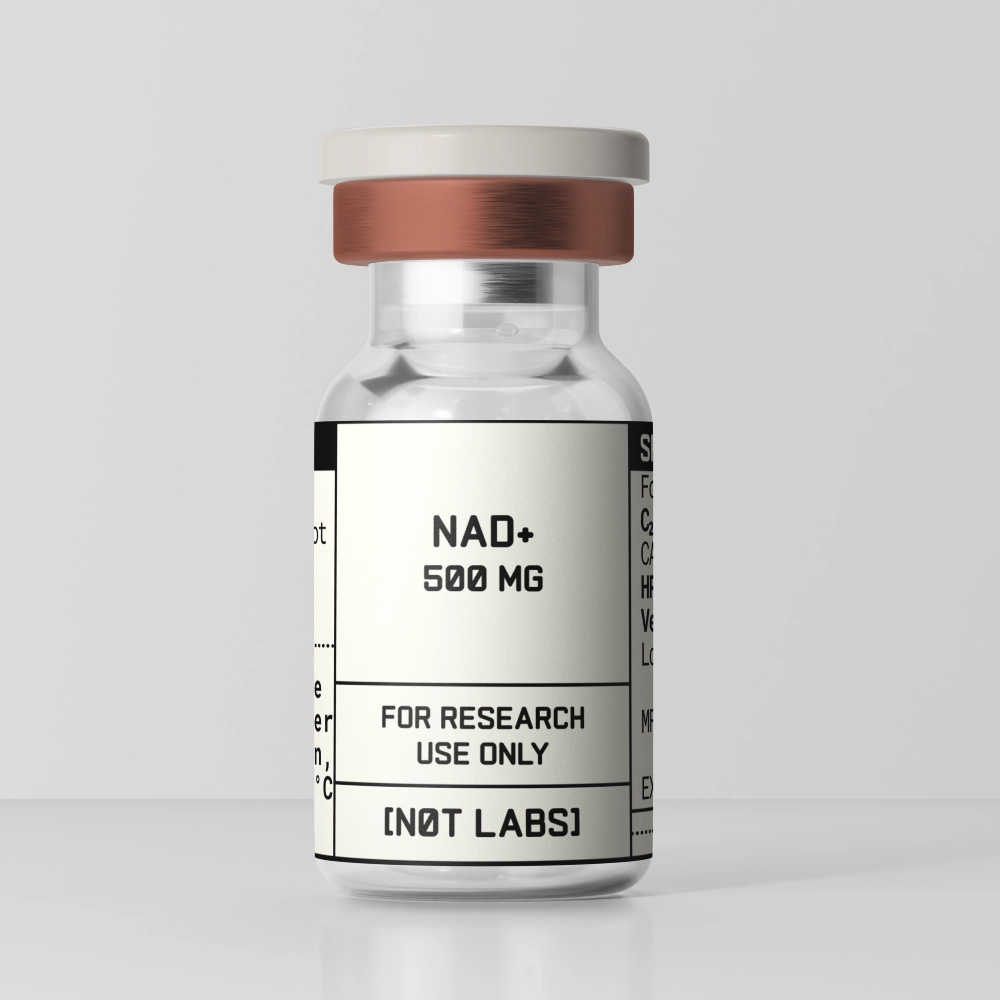
NAD⁺ (nicotinamide adenine dinucleotide) is an essential coenzyme present in all living cells and plays a central role in cellular redox reactions and metabolic processes. In laboratory research settings, NAD⁺ is studied for its involvement in electron transfer, enzymatic function, and intracellular metabolic regulation.
This compound is supplied strictly for laboratory and investigational research purposes.
Compound Breakdown
At the molecular level, NAD⁺ functions as a redox-active coenzyme that participates in numerous biochemical reactions. In preclinical research models, NAD⁺ is examined for its role in:
Oxidation–reduction (redox) reactions
Enzymatic cofactor activity across metabolic pathways
Cellular energy metabolism at the biochemical level
Substrate interactions with dehydrogenases and related enzymes
These properties make NAD⁺ a foundational research compound for studying cellular metabolism and biochemical regulation.
Research Context
Research investigations involving NAD⁺ commonly explore:
Cellular redox balance and metabolic flux
Enzyme-mediated metabolic reactions
Mitochondrial and cytosolic metabolic coordination
Fundamental biochemical pathway analysis
These investigations remain limited to controlled laboratory environments and do not imply clinical or therapeutic outcomes.
Related Categories
NAD⁺ is sometimes evaluated alongside mitochondrial-focused research compounds such as MOTS-c Peptide and SS-31 (Elamipretide) Peptide in broader metabolic and mitochondrial research contexts.