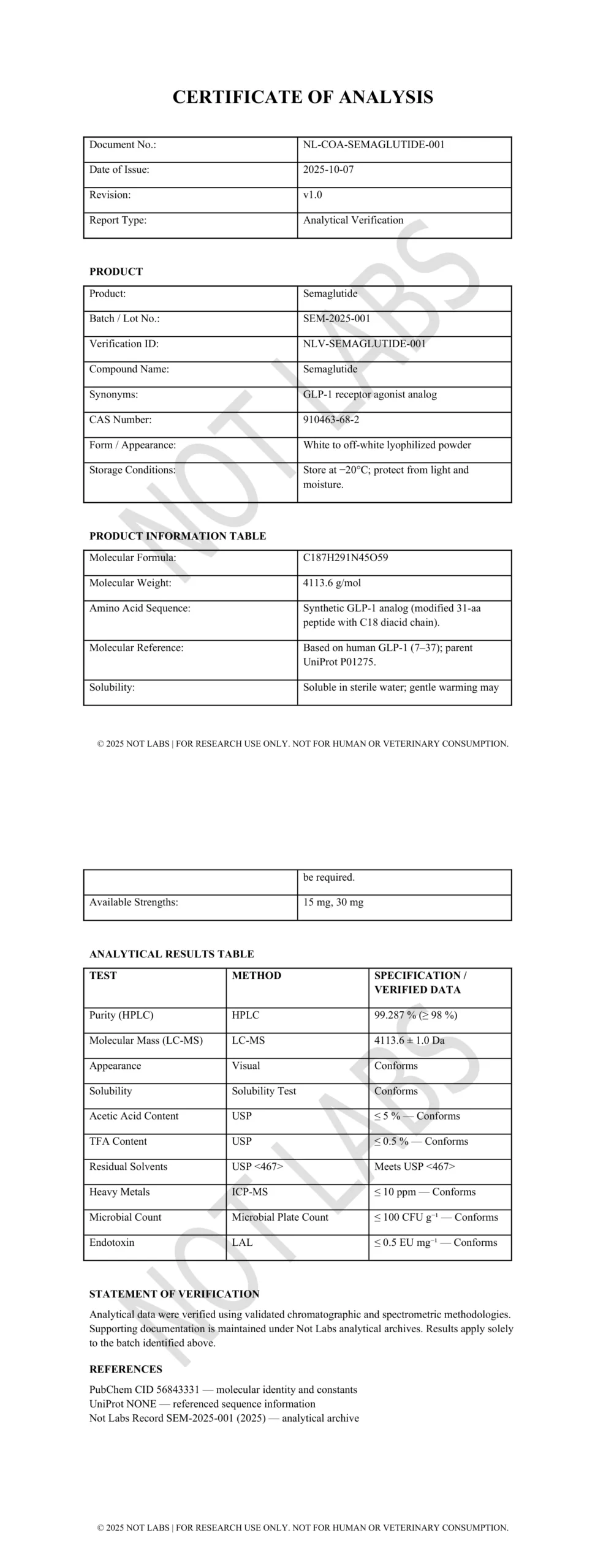
Overview
Semaglutide is a synthetic peptide investigated in laboratory research for its selective activation of glucagon-like peptide-1 (GLP-1) receptor pathways. In preclinical models, GLP-1 signaling is studied for its involvement in glucose regulation, appetite-associated pathways, and broader metabolic signaling mechanisms.
This compound is supplied strictly for laboratory and investigational research purposes.
Compound Breakdown
As a GLP-1 receptor agonist, Semaglutide has been studied in laboratory settings for its ability to influence:
Incretin-mediated metabolic signaling
Glucose homeostasis–associated pathways
Appetite-related neural and peripheral signaling mechanisms
Downstream hormonal interaction frameworks
Its selective receptor activity allows researchers to isolate GLP-1–specific signaling effects within metabolic research models.
Research Context
Research investigations involving Semaglutide commonly explore:
GLP-1–mediated metabolic regulation models
Comparative studies versus dual- and triple-agonist compounds
Incretin signaling pathway specificity
Combination research frameworks involving mitochondrial signaling compounds
These investigations remain limited to controlled laboratory environments and do not imply clinical or therapeutic outcomes.
Related Categories
Semaglutide is frequently evaluated alongside Tirzepatide Peptide and Retatrutide Peptide, and is commonly studied in combination with MOTS-c Peptide. It is also incorporated into metabolic research formulations such as the Metabolic Bundle I: Classic and Metabolic Bundle II: Synergy.