Overview
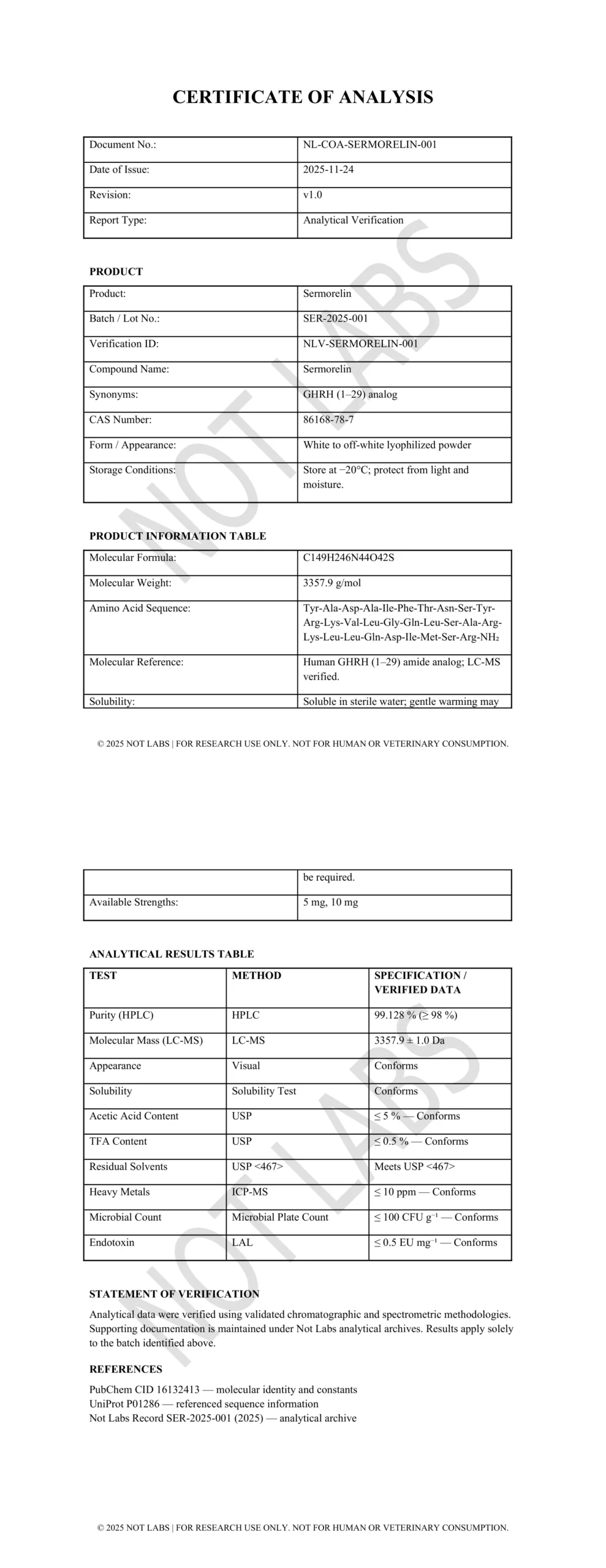
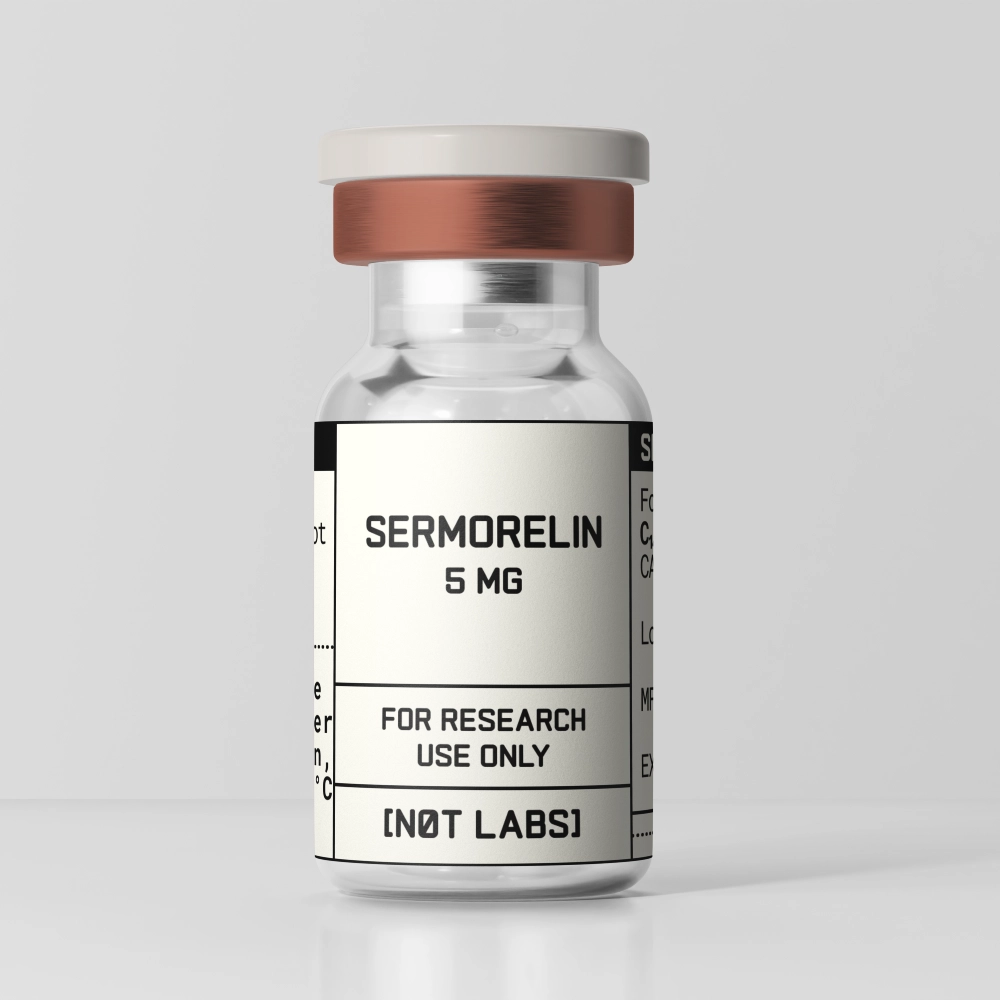
Sermorelin is a synthetic peptide corresponding to the biologically active fragment of endogenous growth hormone–releasing hormone (GHRH). In laboratory research settings, Sermorelin has been studied for its ability to stimulate physiological growth hormone signaling pathways by mimicking native hypothalamic GHRH activity.
This compound is supplied strictly for laboratory and investigational research purposes.
Compound Breakdown
As a GHRH fragment rather than a modified analog, Sermorelin allows researchers to investigate:
Native GHRH receptor activation mechanisms
Physiological growth hormone signaling patterns
Short-duration endocrine signaling dynamics
Comparative studies versus modified GHRH analogs
Its structural similarity to endogenous GHRH makes Sermorelin useful for studies focused on physiological signaling fidelity.
Research Context
Research investigations involving Sermorelin commonly explore:
Endogenous growth hormone axis regulation
Hypothalamic–pituitary signaling models
Comparative analyses versus CJC-1295 analogs
Short-acting growth hormone signaling frameworks
These investigations remain limited to controlled laboratory environments and do not imply clinical or therapeutic outcomes.
Related Categories
Sermorelin is frequently compared with CJC-1295 (No DAC) Peptide and CJC-1295 (DAC) Peptide, and is also studied alongside Ipamorelin Peptide in growth hormone–related research contexts.