Batch-Documented Research Compounds · COA Published With Every Release · Free U.S. Shipping Over $125

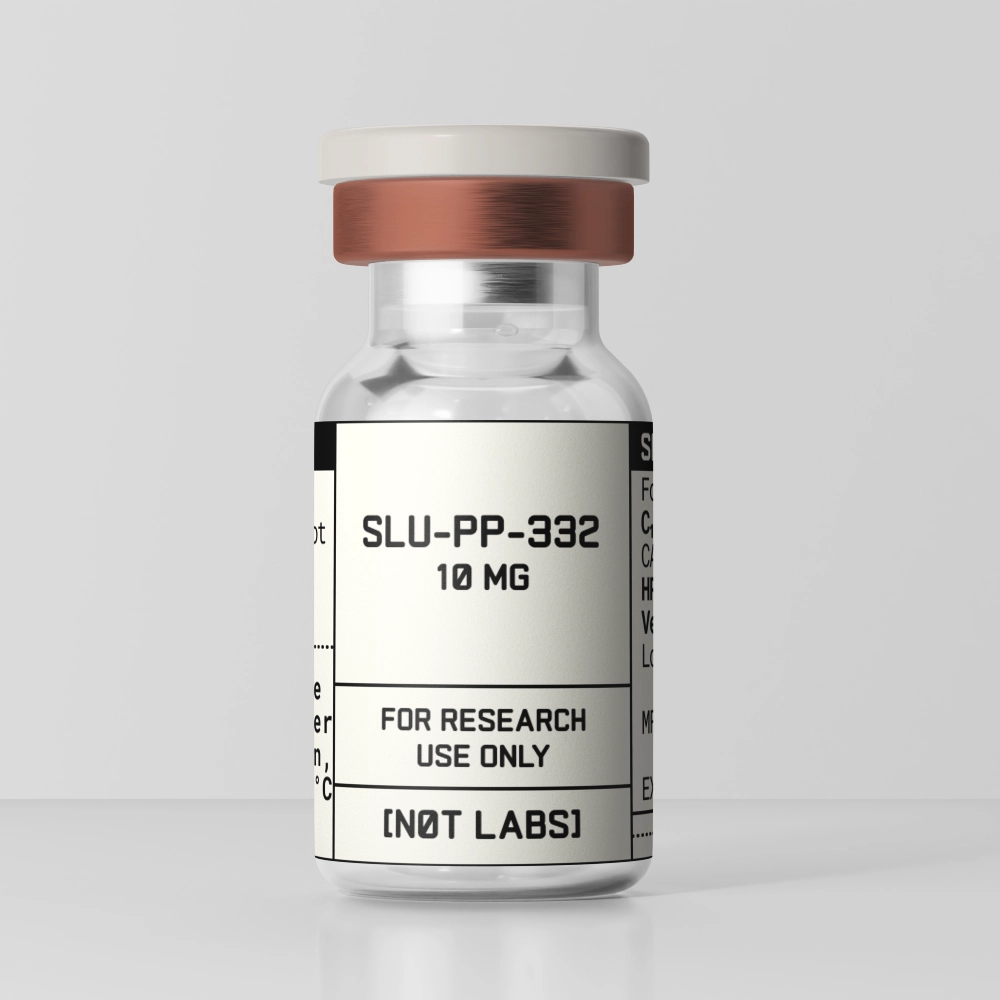
SLU-PP-332 Peptide (10mg)

$82.00

SLU-PP-332 peptide — a COA-verified investigational peptide studied in laboratory research for its interaction with metabolic signaling pathways and regulatory mechanisms in early-stage preclinical models. Supplied as a high-purity, research-only peptide for investigational use.

Free U.S. shipping on $125+
COA Available Batch Documented HPLC Verified

Out of Stock

Overview

SLU-PP-332 is a novel synthetic peptide investigated in laboratory research for its interaction with metabolic signaling and regulatory pathways. As a newer compound, SLU-PP-332 is primarily studied in early-stage preclinical models to characterize its molecular behavior, signaling interactions, and pathway engagement.

This compound is supplied strictly for laboratory and investigational research purposes.


Compound Breakdown

Due to its investigational status, SLU-PP-332 research focuses on foundational characterization rather than outcome-driven study. In laboratory settings, researchers examine:

  • Peptide–receptor interaction profiles

  • Intracellular signaling pathway engagement

  • Molecular stability and behavior in controlled systems

  • Comparative signaling analysis versus established metabolic peptides

This early-stage focus allows researchers to establish baseline understanding prior to expanded investigation.


Research Context

Research investigations involving SLU-PP-332 commonly explore:

  • Early-phase metabolic signaling frameworks

  • Peptide-based regulatory pathway mapping

  • Foundational characterization studies

  • Comparative analyses within investigational compound libraries

These investigations remain limited to controlled laboratory environments and do not imply clinical or therapeutic outcomes.


Related Categories

SLU-PP-332 is occasionally evaluated alongside Retatrutide Peptide and MOTS-c Peptide in broader metabolic signaling research contexts.
Testing & Verification

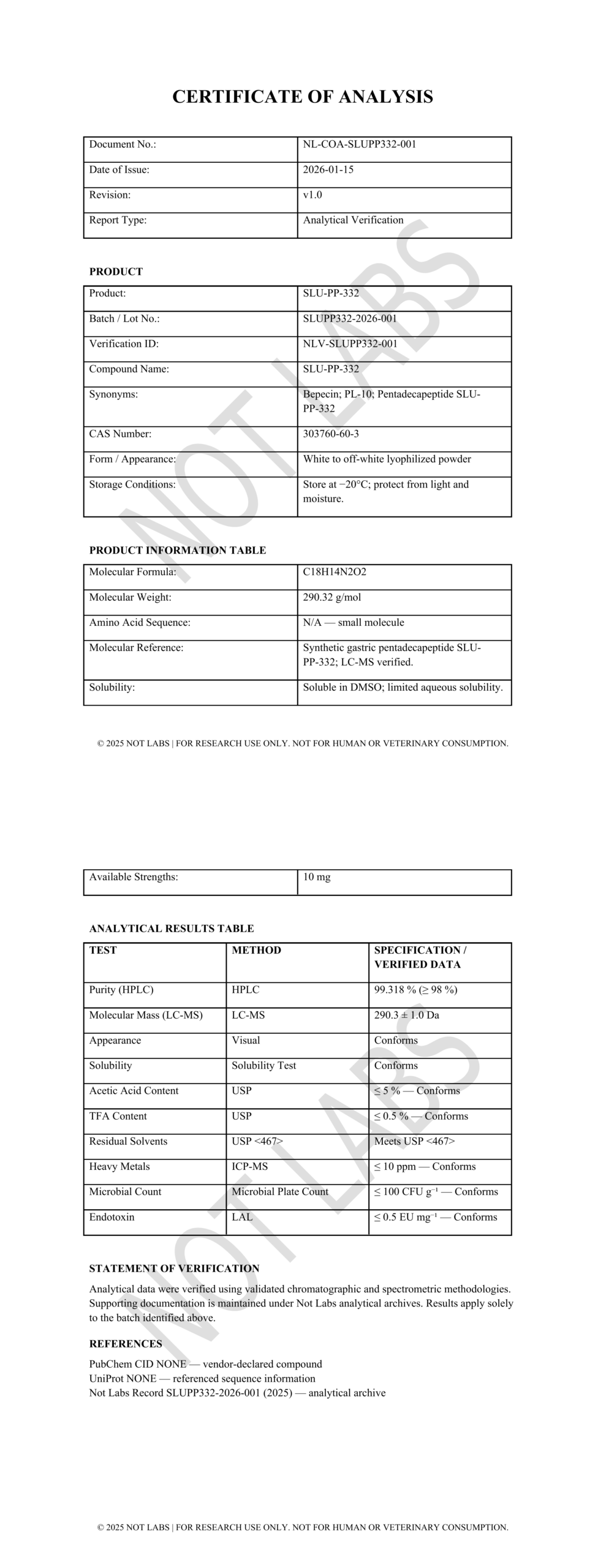
Each batch supplied by Not Labs undergoes independent analytical testing to verify compound identity, purity, and integrity. Batch-specific Certificates of Analysis (COAs) are provided for transparency and research verification purposes.

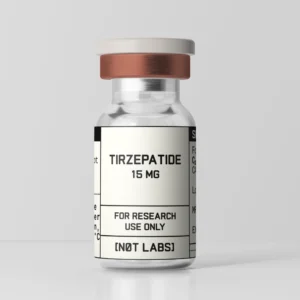
Where applicable, purity specifications (≥99%) are indicated on product labeling and corresponding COA documentation.

SLU-PP-332 10mg COA certificate of analysis for research compound purity


Research FAQ

1. What type of compound is SLU-PP-332 in research settings?
SLU-PP-332 is an investigational peptide studied in early-stage laboratory research to characterize metabolic signaling and regulatory pathway interactions.

2. Is SLU-PP-332 a well-established research compound?
SLU-PP-332 is considered a newer, exploratory compound primarily evaluated in foundational preclinical studies.

3. What research areas commonly utilize SLU-PP-332?
Laboratory research includes early-phase metabolic signaling investigation, peptide characterization studies, and comparative pathway analysis.

4. How should SLU-PP-332 be stored for laboratory research?
Lyophilized SLU-PP-332 is typically stored at −20 °C. After reconstitution, aliquoting and refrigerated storage are commonly used to support experimental stability.

Scientific References

  1. Billon C, Sitaula S, Banerjee S, et al. Synthetic ERRα/β/γ Agonist Induces an ERRα-Dependent Acute Aerobic Exercise Response and Enhances Exercise Capacity. ACS Chemical Biology.
    https://pubmed.ncbi.nlm.nih.gov/36988910/

  2. Billon C, Schoepke E, Avdagic A, et al. A Synthetic ERR Agonist Alleviates Metabolic Syndrome. Journal of Pharmacology and Experimental Therapeutics.
    https://pubmed.ncbi.nlm.nih.gov/37739806/

  3. Xu W, Billon C, Li H, et al. Novel Pan-ERR Agonists Ameliorate Heart Failure Through Enhancing Cardiac Fatty Acid Metabolism and Mitochondrial Function. Circulation.
    https://pubmed.ncbi.nlm.nih.gov/37961903/

  4. Wang XX, Myakala K, Libby AE, et al. Estrogen-Related Receptor Agonism Reverses Mitochondrial Dysfunction and Inflammation in the Aging Kidney. The American Journal of Pathology.
    https://pubmed.ncbi.nlm.nih.gov/37717940/

  5. Bonanni R, Falvino A, Matticari A, et al. Targeting ERRs to counteract age-related muscle atrophy associated with physical inactivity: a pilot study. Frontiers in Physiology.
    https://pubmed.ncbi.nlm.nih.gov/40692696/

JOIN THE NOT LABS RESEARCH LIST

Get updates on new compound releases and emerging research insights.

10% off your first order upon confirmation.