Overview
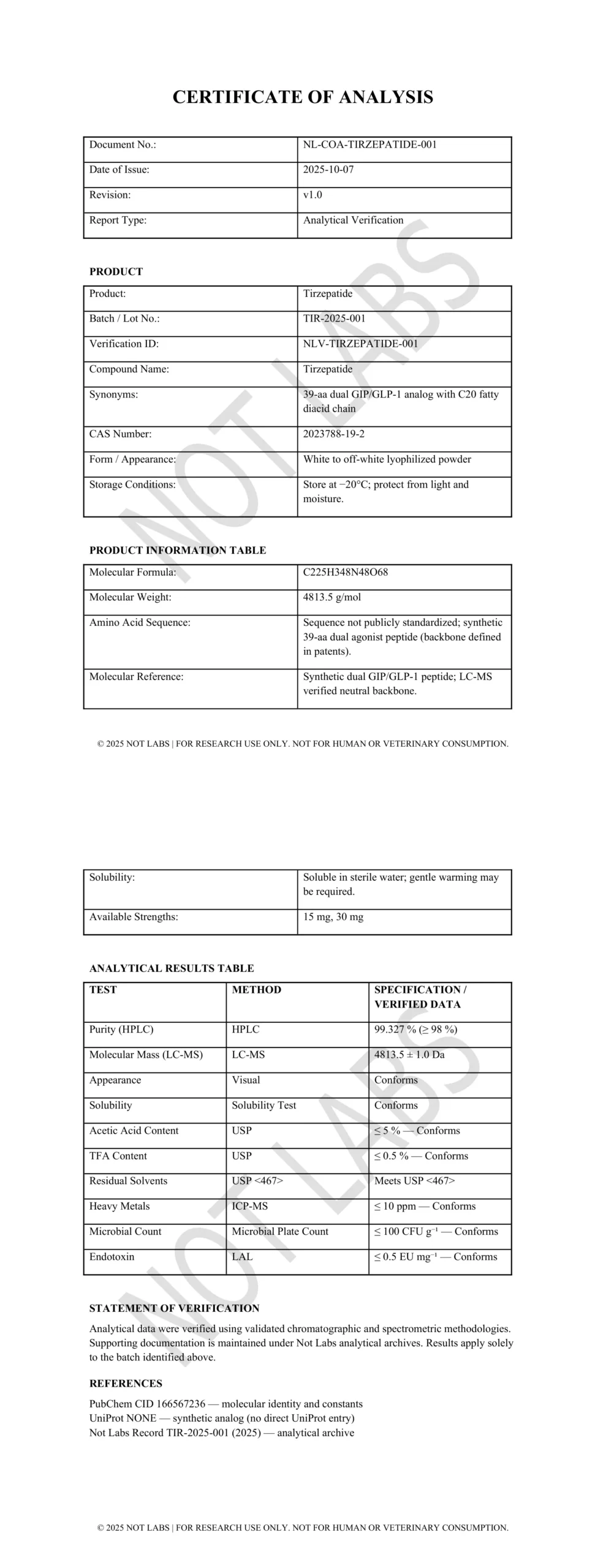
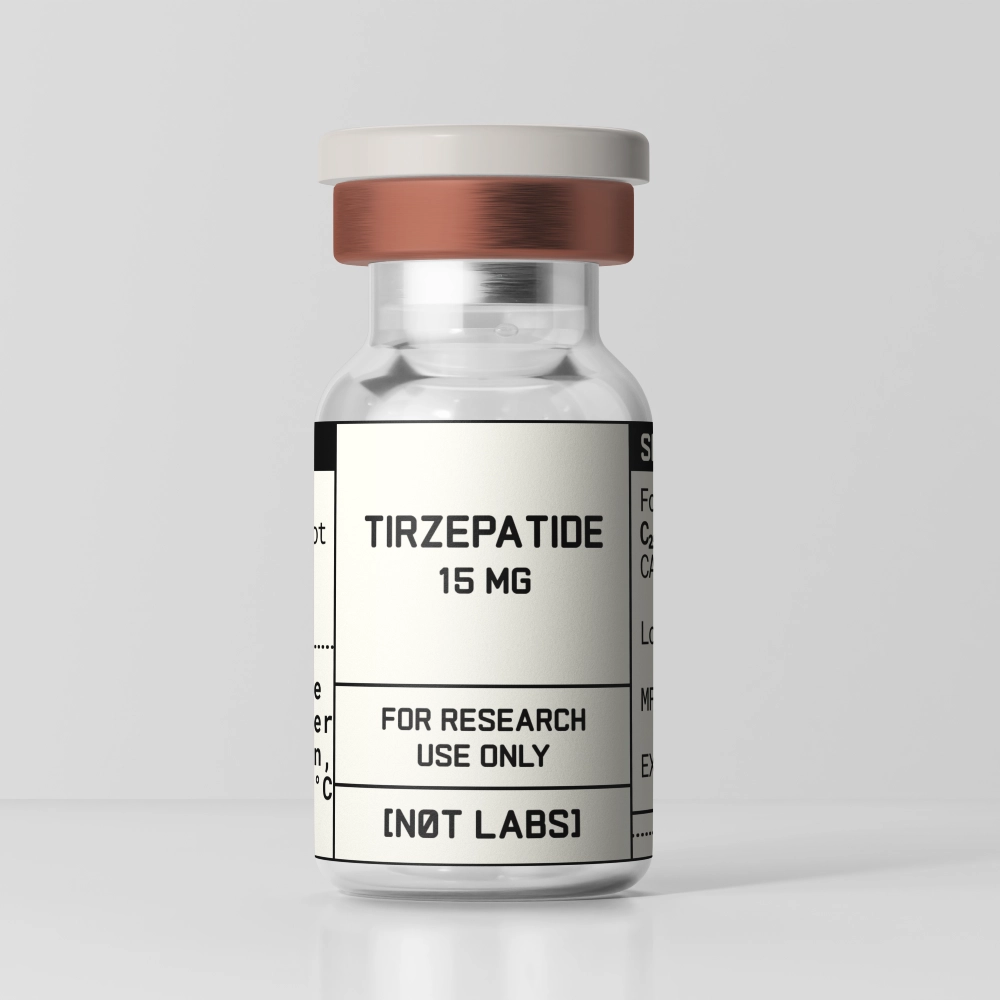
Tirzepatide is a synthetic investigational peptide studied in laboratory research for its interaction with multiple incretin-associated receptor pathways. In preclinical research settings, Tirzepatide is examined for its ability to engage both glucagon-like peptide-1 (GLP-1) and glucose-dependent insulinotropic polypeptide (GIP) receptor signaling within controlled experimental models.
This compound is supplied strictly for laboratory and investigational research purposes and is not intended for human or veterinary use.
Compound Breakdown
Tirzepatide is characterized by its dual incretin receptor engagement profile. In laboratory research models, Tirzepatide is investigated for its interaction with:
GLP-1 receptor–associated signaling pathways
GIP receptor–associated signaling pathways
Coordinated incretin pathway activation mechanisms
Comparative signaling behavior versus single-agonist incretin peptides
This dual-pathway framework differentiates Tirzepatide from GLP-1–only research compounds and supports its use in comparative metabolic signaling investigations.
Research Context
Research investigations involving Tirzepatide commonly explore:
Dual incretin receptor signaling dynamics
Comparative studies versus GLP-1–only peptides such as Semaglutide
Incretin pathway coordination and receptor specificity
Foundational metabolic signaling characterization in preclinical models
These investigations remain limited to controlled laboratory environments and do not imply clinical or therapeutic outcomes.
Related Categories
Tirzepatide is commonly evaluated alongside the following research compounds and formulations: