Batch-Documented Research Compounds · COA Published With Every Release · Free U.S. Shipping Over $125

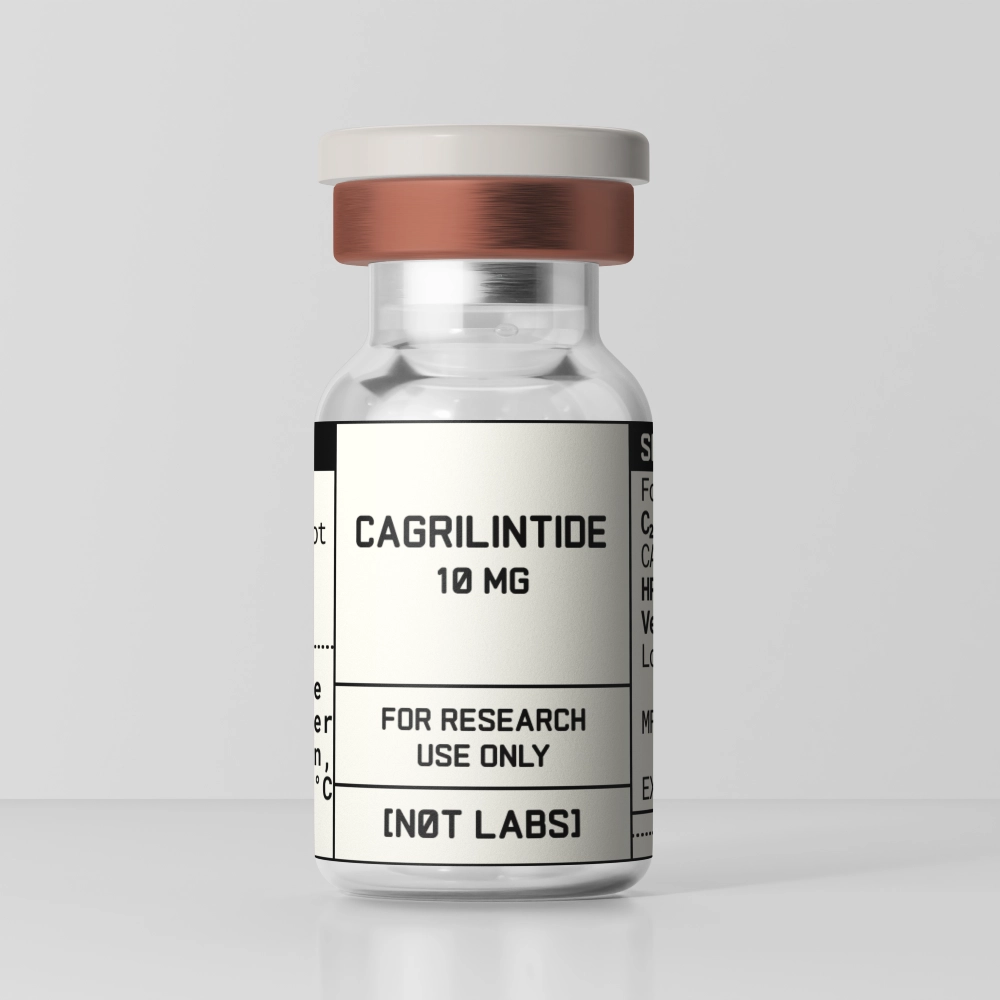
Cagrilintide Peptide (10mg)

$129.00

Cagrilintide peptide — a COA-verified research compound studied for its role as a long-acting amylin receptor agonist in metabolic and appetite-regulation research models. Supplied as a high-purity, research-only peptide for laboratory investigation.

Free U.S. shipping on $125+
COA Available Batch Documented HPLC Verified

Out of Stock

Overview

Cagrilintide is a synthetic peptide analog of human amylin developed for laboratory research into metabolic regulation and appetite-associated signaling pathways. In preclinical research settings, cagrilintide has been studied for its prolonged receptor activity and interaction with central and peripheral mechanisms involved in energy balance.

This compound is supplied strictly for laboratory and investigational research use.


Compound Breakdown

Amylin is a peptide hormone co-secreted with insulin that plays a role in post-prandial signaling and energy regulation. Cagrilintide is designed as a long-acting amylin receptor agonist, allowing researchers to investigate:

  • Amylin-mediated signaling pathways

  • Central nervous system appetite-associated mechanisms

  • Interactions between amylin and incretin systems

  • Prolonged receptor engagement in metabolic models

Its extended activity profile makes cagrilintide a useful research tool for studying sustained signaling effects.


Research Context

Research investigations involving cagrilintide commonly explore:

  • Appetite and satiety signaling pathways

  • Energy balance and metabolic regulation models

  • Comparative studies alongside incretin-based compounds

  • Combination signaling frameworks in preclinical systems

These investigations remain limited to controlled laboratory environments and do not imply clinical or therapeutic outcomes.


Related Categories

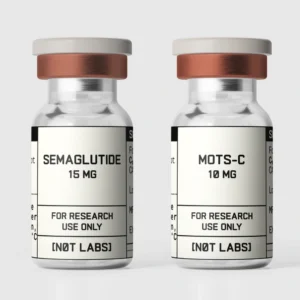
Cagrilintide is frequently evaluated alongside Semaglutide Peptide and Retatrutide Peptide, and is also incorporated into combination research formulations such as the Cagrilintide + Semaglutide Bundle.

Testing & Verification

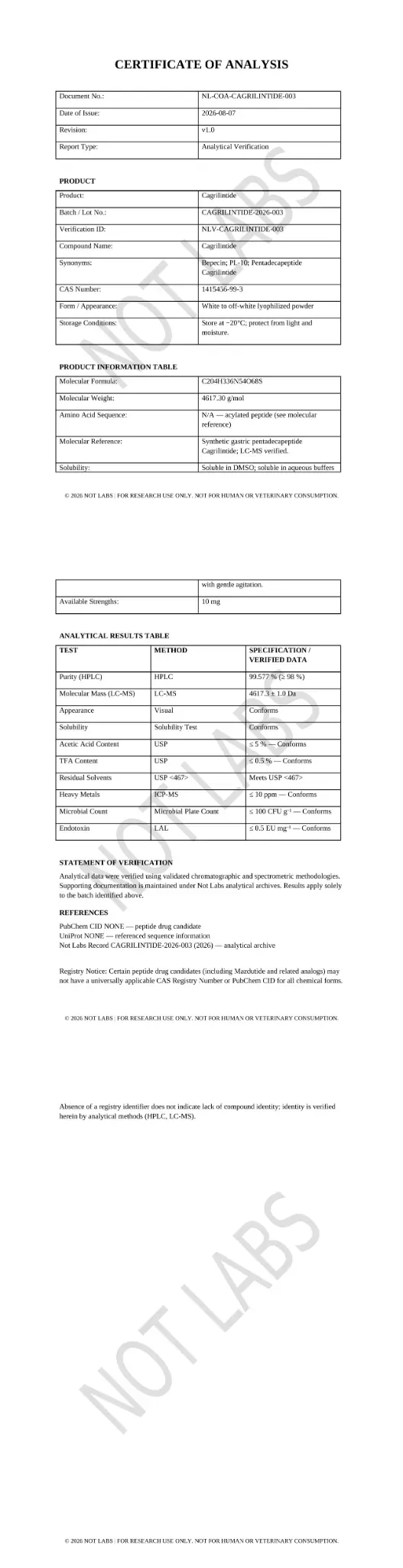
Each batch supplied by Not Labs undergoes independent analytical testing to verify compound identity, purity, and integrity. Batch-specific Certificates of Analysis (COAs) are provided for transparency and research verification purposes.

Where applicable, purity specifications (≥99%) are indicated on product labeling and corresponding COA documentation.

Cagrilintide COA certificate of analysis for research compound purity

Research FAQ

1. How does cagrilintide differ from GLP-1–based research compounds?
Cagrilintide targets amylin receptor pathways rather than GLP-1 receptors, allowing researchers to study complementary metabolic signaling mechanisms.

2. Why is cagrilintide often studied alongside semaglutide?
Preclinical research frequently examines amylin and incretin signaling together to better understand coordinated appetite and energy-regulation pathways.

3. What research areas commonly utilize cagrilintide?
Laboratory research includes metabolic regulation models, appetite-associated signaling studies, and comparative pathway investigations.

4. How stable is cagrilintide during laboratory storage?
Lyophilized cagrilintide is typically stored at −20 °C. After reconstitution, aliquoting and refrigerated storage are commonly used to support experimental stability.

Scientific References

  1. Lau DCW, Erichsen L, Francisco AM, et al. Once-weekly cagrilintide for weight management in people with overweight and obesity: a multicentre, randomised, double-blind, placebo-controlled and active-controlled, dose-finding phase 2 trial. Lancet.
    https://pubmed.ncbi.nlm.nih.gov/34798060/

  2. Enebo LB, Berthelsen KK, Kankam M, et al. Safety, tolerability, pharmacokinetics, and pharmacodynamics of concomitant administration of multiple doses of cagrilintide with semaglutide 2·4 mg for weight management: a randomised, controlled, phase 1b trial. Lancet.
    https://pubmed.ncbi.nlm.nih.gov/33894838/

  3. Frias JP, Deenadayalan S, Erichsen L, et al. Efficacy and safety of co-administered once-weekly cagrilintide 2·4 mg with once-weekly semaglutide 2·4 mg in type 2 diabetes: a multicentre, randomised, double-blind, active-controlled, phase 2 trial. Lancet.
    https://pubmed.ncbi.nlm.nih.gov/37364590/

  4. Garvey WT, Blüher M, Osorto Contreras CK, et al. Coadministered Cagrilintide and Semaglutide in Adults with Overweight or Obesity. New England Journal of Medicine.
    https://pubmed.ncbi.nlm.nih.gov/40544433/

  5. Carvas AO, Leuthardt A, Kulka P, et al. Cagrilintide lowers bodyweight through brain amylin receptors 1 and 3. EBioMedicine.
    https://pubmed.ncbi.nlm.nih.gov/40609154/

JOIN THE NOT LABS RESEARCH LIST

Get updates on new compound releases and emerging research insights.

10% off your first order upon confirmation.